
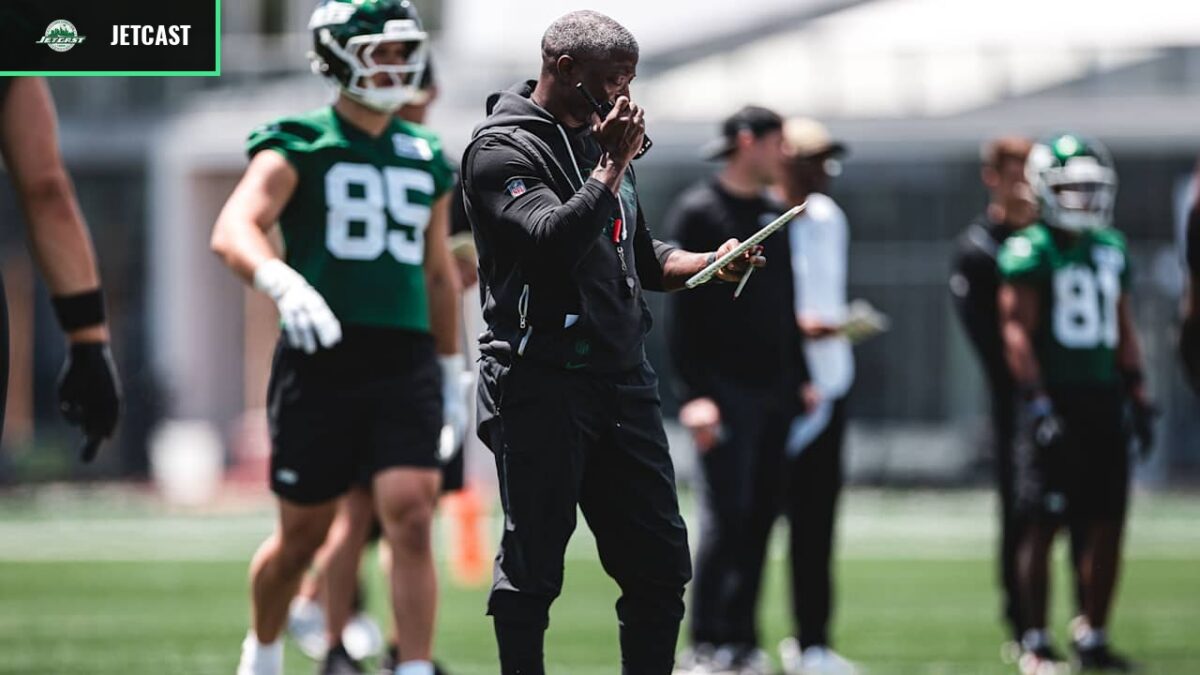


This Jets Patriots preview starts with a question about where the rush comes from, not how threatening it looks before the snap. Can Aaron Glenn make Drake Maye hesitate without leaving a downfield target uncovered? The Jets visit New England in Week 6 on Sunday, October 18, 2026, at 1:00 PM EDT at Gillette Stadium. The useful test for Glenn’s disguises will be whether the uncertainty belongs to the offense while the defense stays sound behind the rush.
What Cleveland Showed About Glenn’s Pressure Disguises
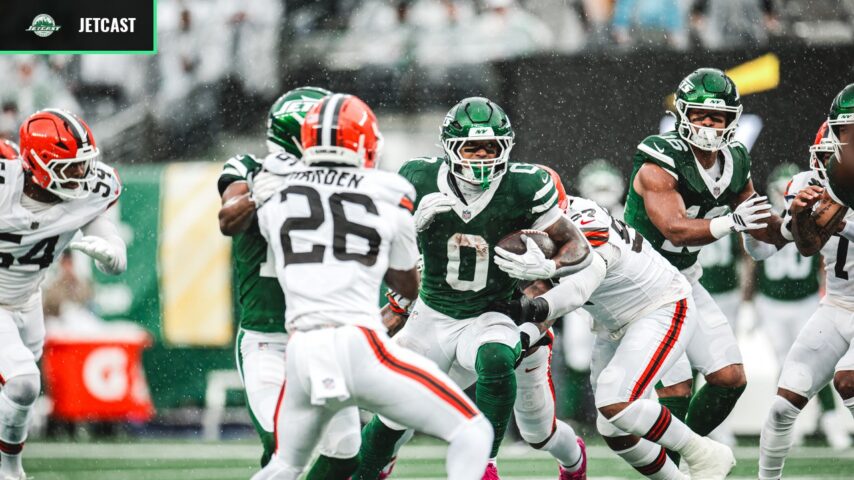
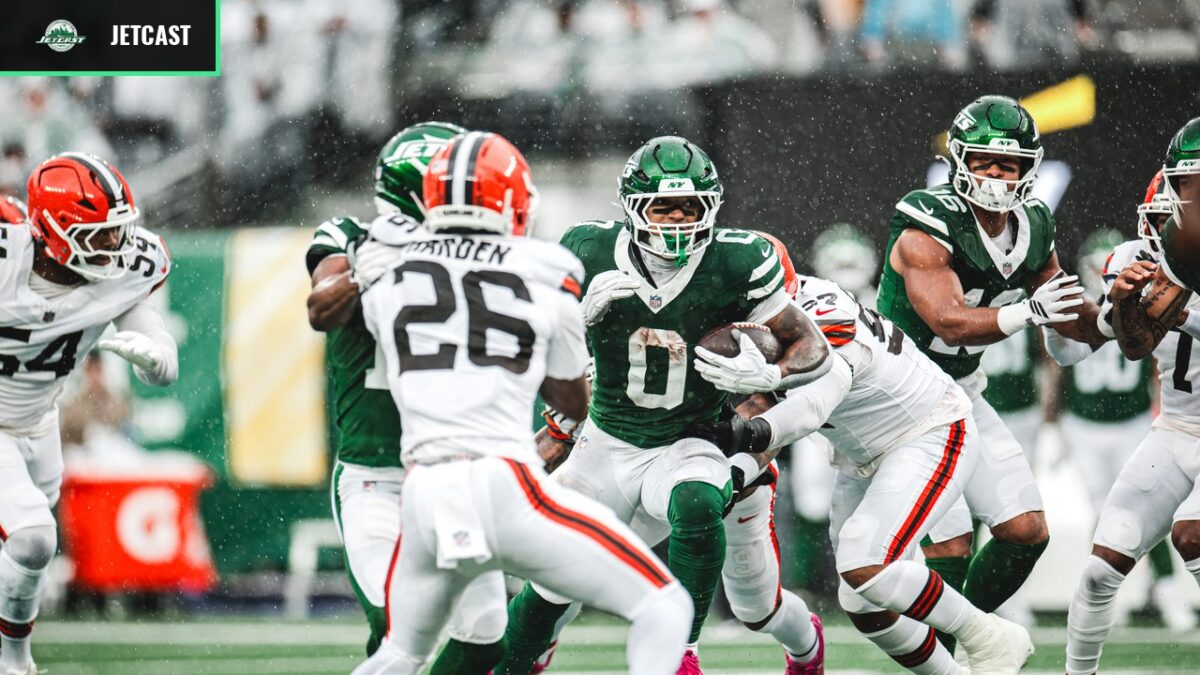
John Pullano’s October 14 Stock Report for NewYorkJets.com describes the changing origins of pressure against Cleveland. Will McDonald IV dropped into coverage on the play that ended with Dane Belton’s sack. On a later play, Jarvis Brownlee Jr. arrived from the edge as David Bailey recorded the sack.
McDonald’s drop is the useful detail to carry into this matchup. A defender who appears to threaten the quarterback can instead become part of the coverage. Brownlee’s edge arrival supplies a different example of where pressure can originate. Those descriptions make the question more interesting than whether Glenn should call a blitz: can the apparent threat and the actual rush differ enough to complicate Maye’s read?
The Jets Browns recap framed Cleveland as a defense-led rescue. That is the completed-game baseline, not a promise about New England. Likewise, Bailey’s camp development, updated August 25, considered assignment discipline alongside his developing rush traits. The relevant connection here is the need for execution within the design, not a new verdict on Bailey’s role.
Why Drake Maye Makes the Deep Ball the Test
Pullano’s account of Maye’s downfield passing identifies the threat that makes this a demanding tactical question. Disguise would offer little comfort if the Patriots quarterback could release the ball toward an uncovered receiver beyond the rush. The Jets need the picture after the snap to be difficult for him without becoming difficult for themselves.
That puts coverage at the center of how to judge the pressure. If Maye has to reconsider where the rush is coming from while his downfield options remain covered, the design could help the Jets. If the deception leaves a clear deep throw, its appearance before the snap will not matter much.
This is not an argument for abandoning aggression. It is an argument for making aggression useful. A sack would be valuable on its own play; it would not excuse an uncovered deep target later.
Showing Pressure Is Not the Same as Sending It
The earlier Jordan Love preview argued for selective pressure and disciplined deep coverage. Here, the sharper question is whether changing the apparent source of the rush can create uncertainty without sacrificing that coverage. McDonald’s reported drop illustrates the distinction between threatening to rush and actually rushing.
For Sunday, the attraction would be making Maye account for a threat that changes after the snap. A defender retreating into coverage could preserve a presence behind the pressure rather than simply vacating the passing game. Whether that helps would depend on the resulting coverage and the rush reaching him, not on how busy the alignment looks.
There is a fair objection: Maye could recognize the change and find a throw anyway. Disguise alone does not establish an advantage. The Jets would still need to execute after revealing their intentions. An elaborate presentation that produces neither disruption nor sound coverage deserves no extra credit for creativity.
What to Watch When the Jets Face New England
Watch where the threatened pressure becomes an actual rush, then follow what remains behind it. Does Maye appear uncertain, or can he move directly to a downfield option? Does a defender dropping away from the line help keep that option covered? The value would be in connecting those observations, rather than treating movement before the snap as success.
A sack should not end the evaluation, and a throw without a sack should not automatically condemn the call. The useful question is whether the Jets make Maye work through a changing picture while denying an uncovered deep target.
Cleveland supplied examples worth testing against a different quarterback. New England will test whether the deception travels. Glenn’s pressure should be judged by the problem it creates for Maye, not the spectacle it creates before the ball moves.