
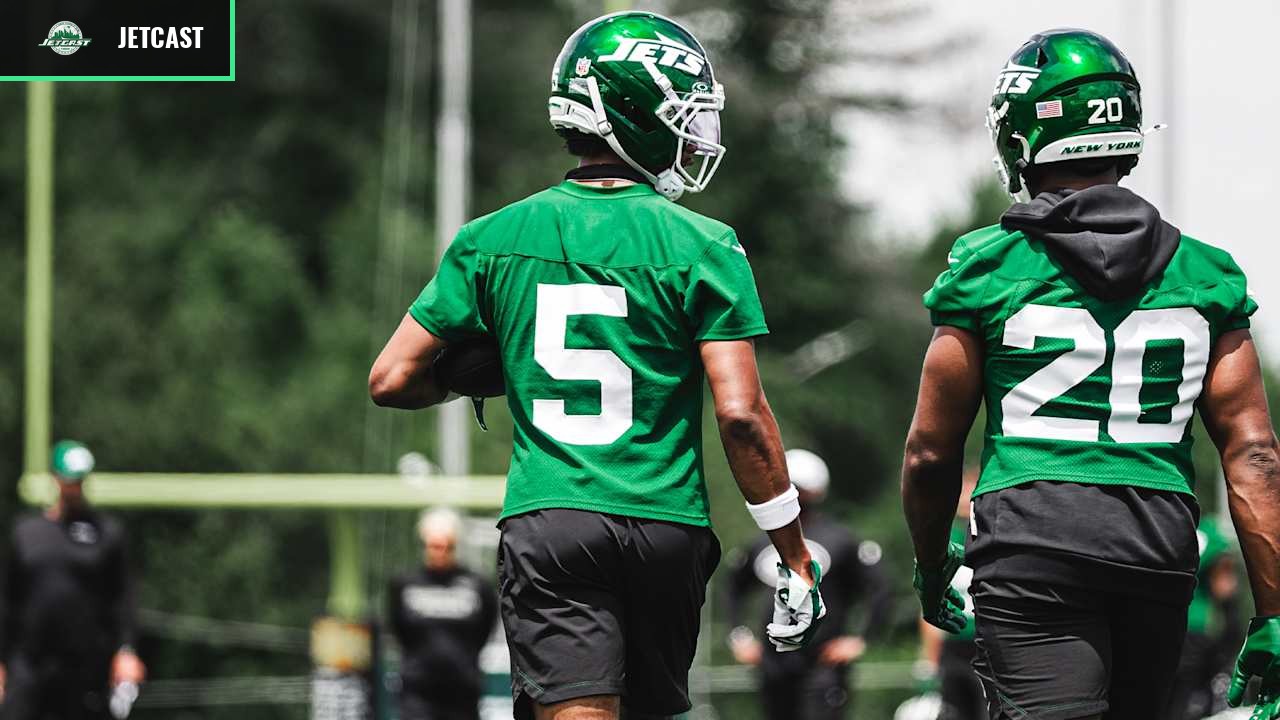
Garrett Wilson is not a projection anymore. He is the Jets’ best proven receiving threat. The question for 2026 is not whether Wilson is good enough to carry a passing game. It is whether the Jets have finally built enough around him that a defense can no longer treat him as the only problem worth solving.
Why defensive attention is the question around Wilson
When one receiver is clearly the best option on the roster, defenses have an easier decision to make. They can lean coverage his way, funnel extra bodies toward him on obvious passing downs, and dare everyone else to beat them. That is a reasonable baseline assumption for Wilson entering 2026. It is not, however, something JetCast can quantify from the outside. There is no verified data here on how a defense’s coverage shell would change specifically because of Wilson, so this piece treats defensive attention as a real and logical concern rather than a documented trend with a number attached to it.
This is also a different conversation than the one JetCast already had about Wilson’s push for more route freedom under Frank Reich. That piece was about how the Jets structure his role inside the offense. This one is about who else is on the field with him, and whether that changes what a defense is willing to risk. The newer Garrett Wilson outside receiver analysis looks at the alignment change Wilson described in August.
What Aaron Glenn said about the supporting cast
Aaron Glenn addressed the topic directly this week, and Jets X-Factor captured his answer when asked about defenses keying on Wilson. Per Jets X-Factor, Glenn said: “Well, it really opens us up to any time you want to try to double Garrett. We have other, I would say high-level players that can go out there and make plays, and you just named two of them [Adonai Mitchell, Omar Cooper Jr.] that I think are going to do a good job for us this year.”
That is a head coach making a case for his roster, not a stat sheet proving a result. Glenn is describing what he expects to happen if a defense doubles Wilson, and he is naming the two players he thinks are capable of making a defense pay for it. It is worth taking seriously because it is Glenn’s own read on his roster. It is also worth treating as exactly what it is: an expectation stated before a single regular-season snap has been played in 2026.
Why Adonai Mitchell and Omar Cooper Jr. matter
Glenn did not name two random names. NFL.com’s current roster snapshot lists both Adonai Mitchell and Omar Cooper Jr. as active Jets wide receivers, and both are the players Glenn says he expects to fill that role: receivers good enough that a defense cannot simply leave a backup on them and load up on Wilson.
JetCast has already covered the case for each of them on their own terms. Mitchell arrived as a bet the Jets made on his ceiling, a player with NFL experience who is still building the kind of track record that would make Glenn’s confidence look proven rather than aspirational. Cooper Jr. is a rookie whose appeal, as JetCast has written, is his versatility across roles rather than a finished résumé. The evidence supplied here does not prove Glenn’s expectation right; it only shows a coach publicly saying he expects them to be good enough to matter, which is a real data point about how the staff views the room, even if it is not evidence of results.
The receiver room is not the only part of this equation, either. Mason Taylor’s development at tight end factors into the same math. JetCast has detailed how Taylor fits into the passing game, and a credible tight end threat is one more reason a defense cannot simply assign its best coverage answer to Wilson and call it a day.
What would make a career year plausible
The logic behind a bigger year for Wilson is straightforward. If Mitchell, Cooper Jr., and Taylor are consistently good enough that a defense has to account for them, then doubling Wilson becomes a costlier decision. A defensive coordinator who commits extra attention to Wilson while conceding easier throws elsewhere is only making a smart trade if the other options are not actually threats. Glenn’s argument is that they are.
None of that is guaranteed. It depends on rookies and a still-developing receiver actually performing against NFL competition, not just training camp reps or a coach’s preseason confidence. A career year for Wilson is plausible under this scenario. It is not promised by it.
The line between opportunity and projection
Everything here is opportunity, not proof. Glenn’s comment is a coach’s expectation, stated before camp battles have been settled and before a single 2026 snap has counted. Mitchell and Cooper Jr. are not proven high-level NFL players; they are players their head coach believes can become that. The gap between what a coaching staff says in July and what actually shows up on Sundays is the entire reason JetCast treats camp quotes as a starting point rather than a conclusion.
The honest version of this story is that the coaching staff is publicly confident about the pieces around Garrett Wilson, and Glenn is willing to say so on the record. Whether that confidence translates into fewer double teams and a bigger season for Wilson is a real possibility worth watching, not a verdict worth writing today.