
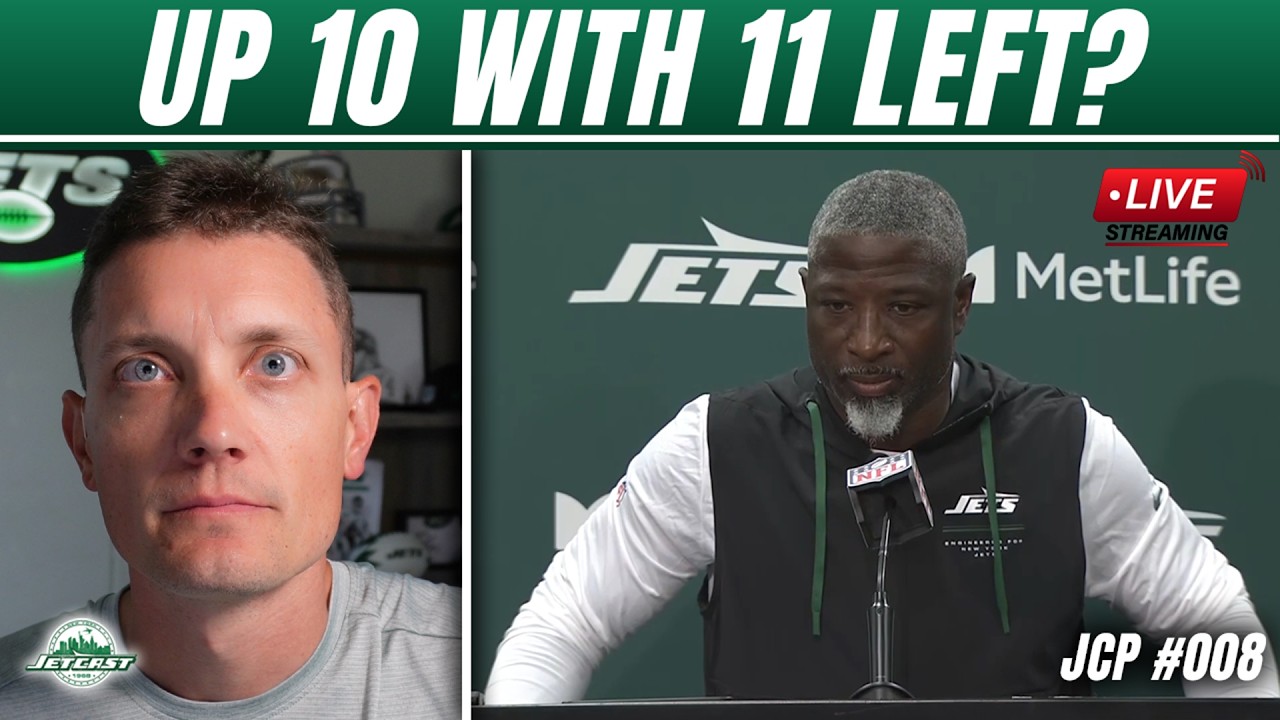
Aaron Glenn’s Clock Management Comes First
Pat and Ray do not treat this as a game the Jets were never equipped to win. Their frustration comes from the opposite conclusion: New York had enough going for it to finish the job. The conversation keeps returning to the difference between calling a strong defensive game and managing the entire team when the clock becomes part of the opponent.
Ray questions the conservative approach before halftime. Both speakers also challenge the unused late timeout and the decision to receive in overtime. These are their judgments about the choices, not a claim that a different call guarantees a win. The central question is whether Glenn gave an uneven offense the best opportunity to finish, or let possessions disappear while trying to avoid a mistake.
The Short-Yardage Call and the Offensive Line
The argument gets specific when Pat and Ray examine the failed short-yardage run. They discuss the shotgun handoff, the time it gives the defense to penetrate, and whether changing the alignment could have protected the play. Pat favors getting under center and allowing the runner to move downhill rather than asking him to recover ground before reaching the line.
That is not the same as letting the blockers off the hook. The episode spends real time on the offensive line’s difficult afternoon and the sacks at the start of overtime. Pat argues that Geno Smith needed more support from the running game. Ray wants more creativity from Frank Reich when the original plan is not working. The coaching and execution arguments overlap rather than cancel each other out.
Penalties and Special Teams Kept the Door Open
Some of the strongest frustration is reserved for mistakes outside the headline coaching decisions. Ray brings his view from the stadium to the discussion of the weather, field conditions, coverage, and return-game problems. Pat pushes back on treating the conditions as an explanation that applies only to the Jets: both sides had to play through them.
The larger point is how those mistakes accumulated. A defense can survive one bad situation and still be asked to rescue another immediately afterward. The speakers connect the penalties and special-teams breakdowns to the lost chances to put Green Bay away, rather than reducing the entire afternoon to the final play.
A Better Defense Does Not Settle the Coaching Question
There is a distinction running through the anger: Pat credits the defensive performance while questioning Glenn’s overall game management. Ray is also unwilling to dismiss the roster’s talent simply because the finish was so frustrating. Neither turns that into a claim that the season is already decided.
The closing conversation looks toward Detroit and asks what the staff can learn. For the earlier expectations behind that discussion, revisit the 2026 Jets schedule breakdown. The question of support around the quarterback also connects to our Geno Smith expectations analysis. You can find the rest of the full-length conversations in the JetCast episodes archive.
Episode source: This recap follows the discussion and transcript of Aaron Glenn Had Three Chances to Win This Game, with title, runtime and completion checked against YouTube metadata. Coaching conclusions remain the speakers’ analysis.